
From Ball Bearings to BeatBlocks: How Tangible Music Creation Came of Age
The journey from research labs to living rooms, and why hands-on, screen-free music-making is having its moment.
For decades, a quiet revolution has been brewing at the intersection of music technology and human-computer interaction. Researchers, designers, and engineers have been asking the same question: what if making electronic music could feel as natural as picking up a real instrument? What if, instead of staring at a screen, you could reach out and touch the beat?
In 2026, that question is being answered, not by one product, but by an entire generation of tangible music instruments arriving on the consumer market almost simultaneously. But this moment didn't arrive out of nowhere. It has roots stretching back through decades of innovation, experimentation, and a stubborn refusal to accept that electronic music-making has to mean screen-based music-making.
The 16 Buttons That Changed Everything
Any story about hands-on electronic music creation has to start with the Roland TR-808. When it launched in 1980, its row of sixteen colour-coded buttons offered something new: a physical, tactile way to program drum patterns step by step. You didn't need to understand notation or studio engineering. You pressed buttons, you heard beats, and you moved them around until it sounded right.
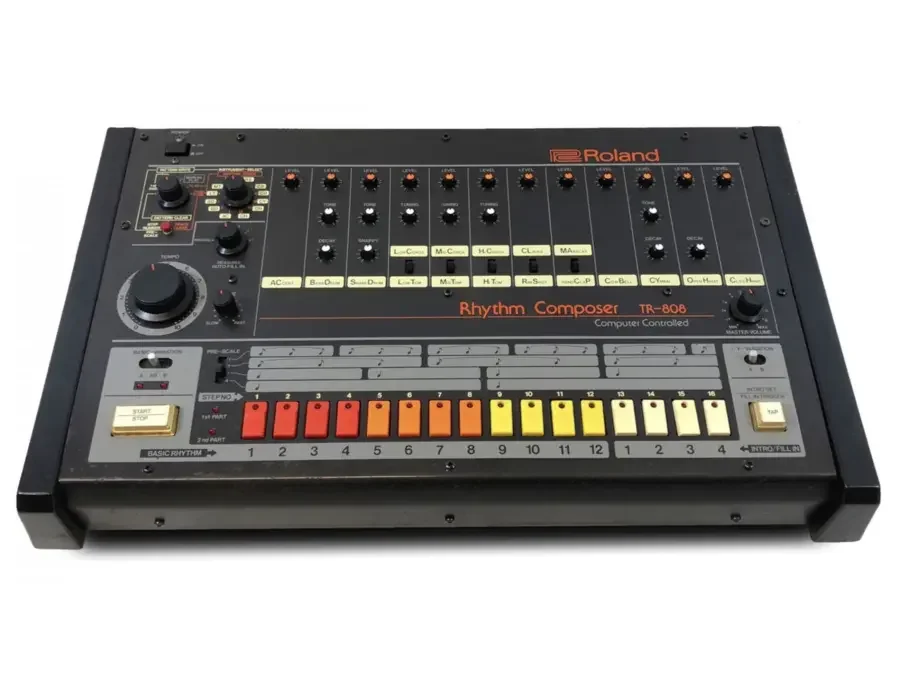
Roland TR-808
The 808 was famously a commercial disappointment at first. Only around 12,000 units were built before Roland discontinued it in 1983, its analog percussion sounding nothing like real drums. But that "limitation" turned out to be its greatest asset. Its distinctive sounds became the foundation of hip-hop, electro, house, and techno, from Marvin Gaye's Sexual Healing(1982) to Aphex Twin's Analogue Bubblebath (1991). More importantly for this story, its step-sequencer interface established a template: music creation as a spatial activity separated from time. Unlike a piano keyboard, where physical space maps to pitch but you still perform in real time, the 808 let you lay out a pattern as a static arrangement and then set it running. Patterns you could see, touch, and rearrange before hearing them play back.
Of course, all acoustic instruments are tangible music interfaces. A piano is a linear sequence of keys where physical position maps to pitch. What the 808 offered was something different: a tangible interface for programming electronic music. Not playing, but composing in space, one step at a time.
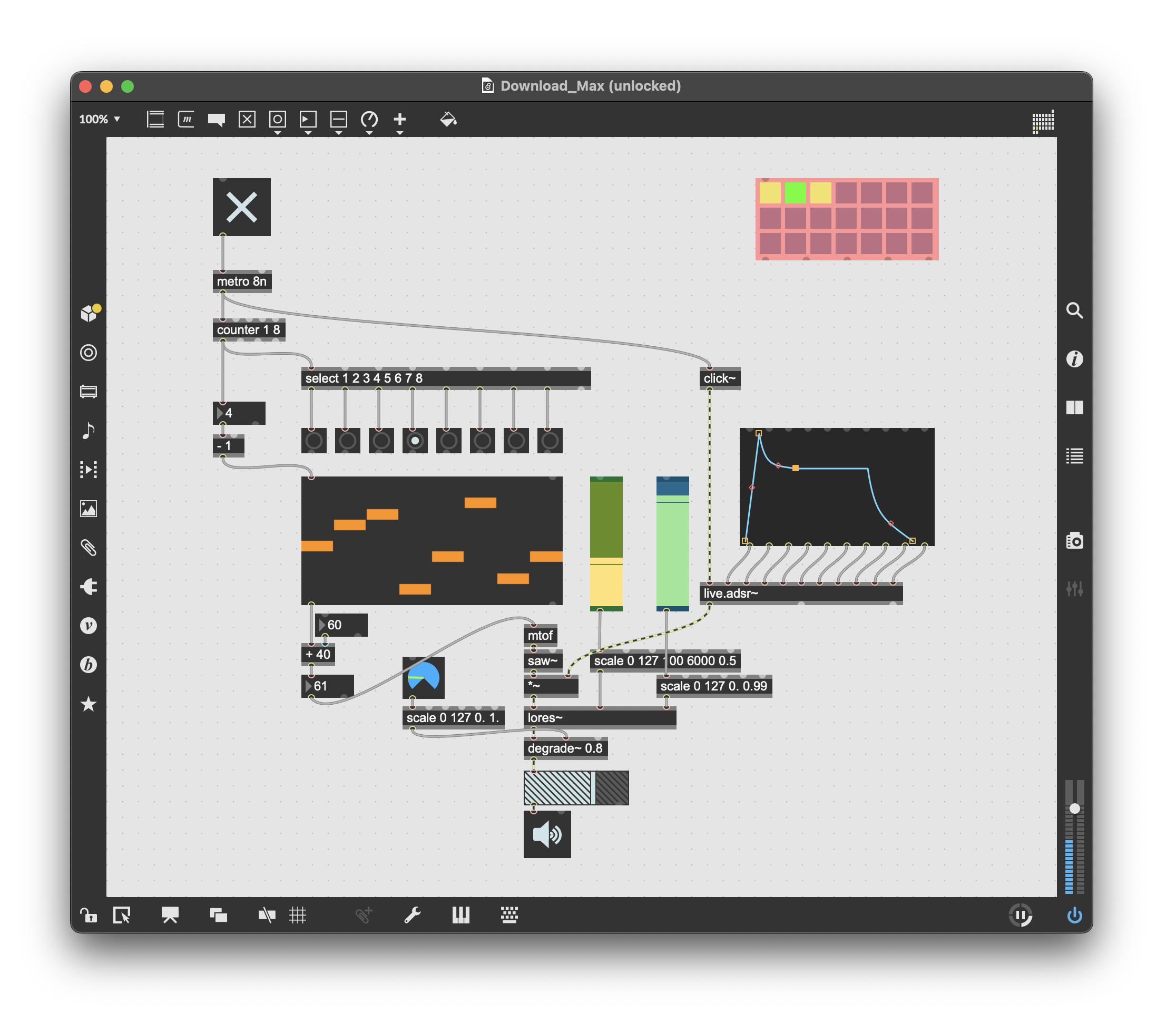
Max/MSP
Max/MSP and the Programmable Playground
An honourable mention has to go to Max/MSP here, because for me and thousands of others, it was the thing that opened the door to sensor-based digital audio tinkering. If you could wire up a sensor, Max could open up a whole world of musical possibilities. That low barrier to entry created a whole generation of people who thought "what if I plug this into that?" and went from there.
While Roland was putting physical buttons on drum machines, a parallel revolution was happening in software. Miller Puckette began work on Max in 1985 at IRCAM in Paris, creating a visual programming environment where sound could be patched, routed, and manipulated in real time. The software was commercially released in 1990, extended by David Zicarelli, and eventually evolved into Max/MSP (with Cycling '74 releasing their version in 1997). Puckette also independently created the open-source Pure Data in the mid-1990s. Both continue to thrive: Max/MSP remains a staple of music technology education and creative practice, and Pure Data powers everything from art installations to embedded audio projects.
Max's patch-cord metaphor (connecting objects on screen to build signal chains) was itself a kind of tangible thinking applied to software. More practically, Max and its descendants made it possible for researchers to rapidly prototype new physical interfaces, connecting sensors, cameras, and custom controllers to sophisticated audio engines. Without Max/MSP, Pure Data, and SuperCollider, many of the tangible instruments that followed would never have left the lab.
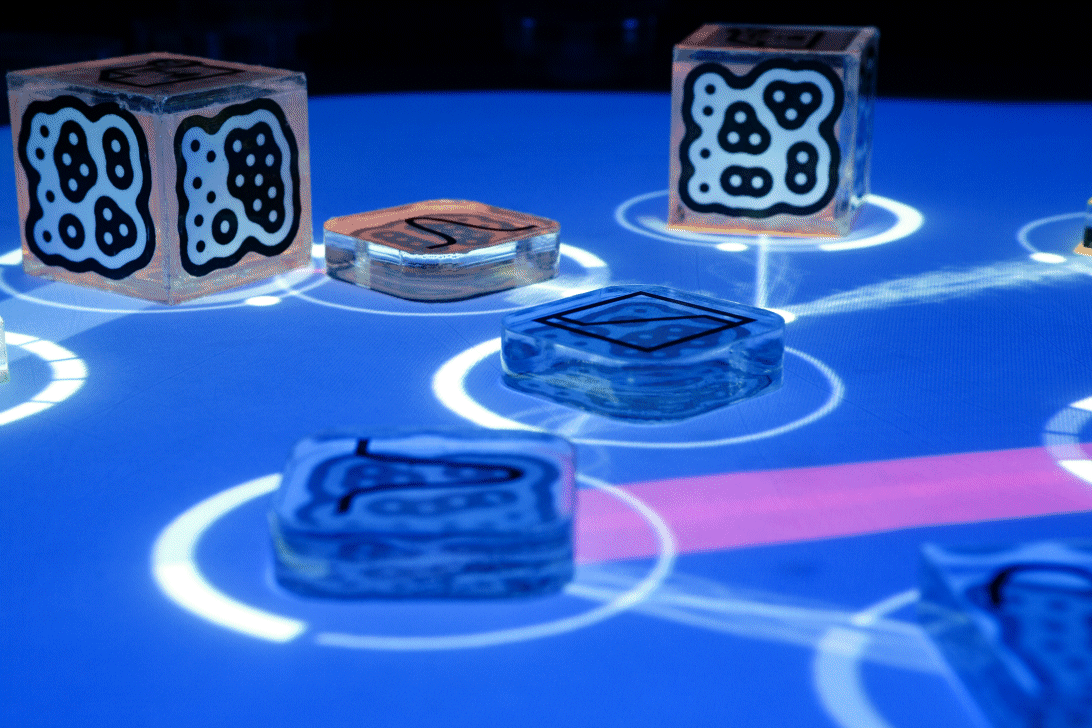
Reactable
The Reactable: Tangible Synthesis on Stage
If the TR-808 gave us physical buttons for sequencing, the Reactable showed what was possible when you made the entire synthesiser tangible.
Developed at the Music Technology Group at Universitat Pompeu Fabra in Barcelona from 2003 by Sergi Jordà, Marcos Alonso, Martin Kaltenbrunner, and Günter Geiger, the Reactable was a glowing round table onto which performers placed physical blocks called "tangibles". Each block represented a synthesiser component: oscillators, filters, sequencers, effects. Move the blocks closer together and they connected. Rotate them and their parameters changed. The table's surface came alive with animated waveforms and connection lines, creating an instrument that was as compelling to watch as it was to play.
Built on the open-source reacTIVision computer vision framework and powered by an audio engine based on Pure Data and SuperCollider, the Reactable was deeply rooted in academic research, but it broke through into popular culture when Björk adopted it for her 2007 Volta world tour, debuting it at the Coachella Valley Music and Arts Festival on April 27, 2007. Suddenly, tangible music interfaces weren't just a research curiosity. They were centre stage. Rolling Stone named it the hot instrument of 2007.
The Reactable demonstrated something important: that physical objects on a surface could create an intuitive, collaborative way to interact with complex digital audio. It inspired a generation of researchers and developers, including, directly, work that would eventually lead to BeatBlocks. Sadly, the spin-off company Reactable Systems ceased commercial operations and was dissolved in 2022, though the team are working on preserving the instrument as a legacy project. It’s a reminder that being a groundbreaking research instrument and being a sustainable commercial product are two very different things.
BeatBearing
The BeatBearing: Elegant Simplicity
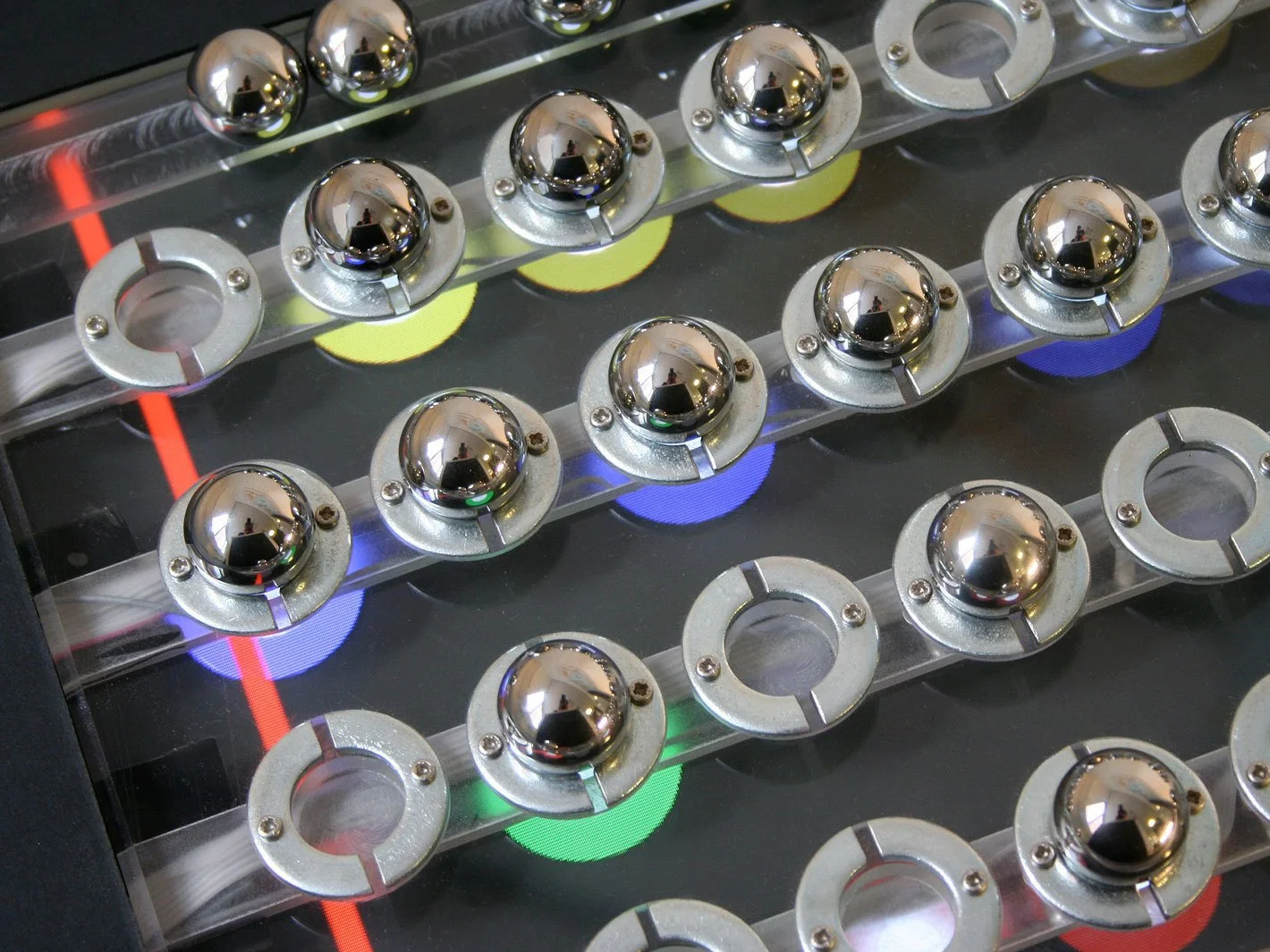
Back in the mid-2000s, at the Sonic Arts Research Centre (SARC) at Queen's University Belfast, Peter Bennett was developing the BeatBearing. The concept was simple: a transparent grid sitting on top of a screen, with ball bearings serving as notes. Drop a bearing on the grid, it triggers a drum sound at that position in the sequence. A red line sweeps across the screen beneath, showing the current playback position. That's it. And it worked brilliantly.
Bennett himself traces the inspiration back to encountering tangible user interfaces at Ars Electronica in 2003, including James Patten's Audiopad project and Sony CSL's Block Jam, experiences that led him to pursue a PhD studying and developing new musical instruments. The BeatBearing was far from alone. By the mid-2000s, tangible sequencers were a busy area in music technology research: Enrico Costanza's Audio d-touch (2003) used computer vision to track wooden blocks on a grid, Block Jam let multiple players arrange physical blocks into polyrhythmic sequences, and various other projects at NIME and CHI explored similar territory. But the BeatBearing stood out because it was so immediately obvious: you put a ball bearing on the grid, you hear a sound. Move it, the pattern changes.
What the BeatBearing and the Reactable shared, and what connects them to everything that has followed, is a commitment to what HCI researchers call "tangible user interfaces": the idea, first formalised by Hiroshi Ishii at MIT's Tangible Media Group in his seminal Tangible Bits paper (CHI 1997), that giving people physical handles on digital data makes interaction richer, more intuitive, and more collaborative.
The Present: A Growing Market
Fast forward to 2026, and the ideas that were once confined to research labs, music festivals, and Make Magazine projects are arriving as polished consumer products, all at once.
Tembo
Tembo by Musical Beings
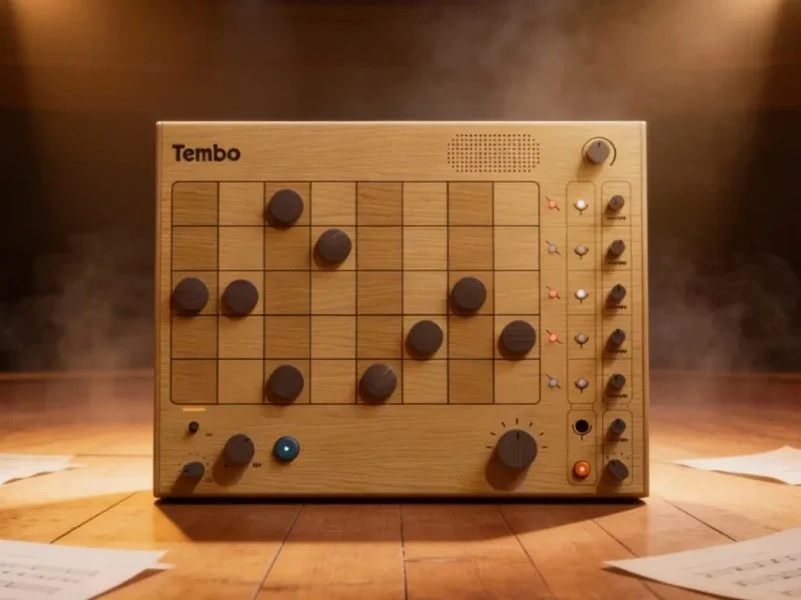
Tembo is a screen-free drum machine and sampler built into a wooden enclosure with a grid and a set of magnetic pucks. You build beat patterns by placing pucks on the grid, an approach with a lineage tracing back through the BeatBearing and Reactable to those sixteen coloured buttons on the 808. With a built-in speaker, MIDI connectivity, and sample recording, it's a serious creative tool that happens to be immediately accessible. It's also one of those products where the design just makes you want to pick it up and start playing with it, which is kind of the whole point. At the time of writing, Tembo has yet to launch but has generated significant pre-launch interest.
Blipblox myTracks
Blipblox by Playtime Engineering
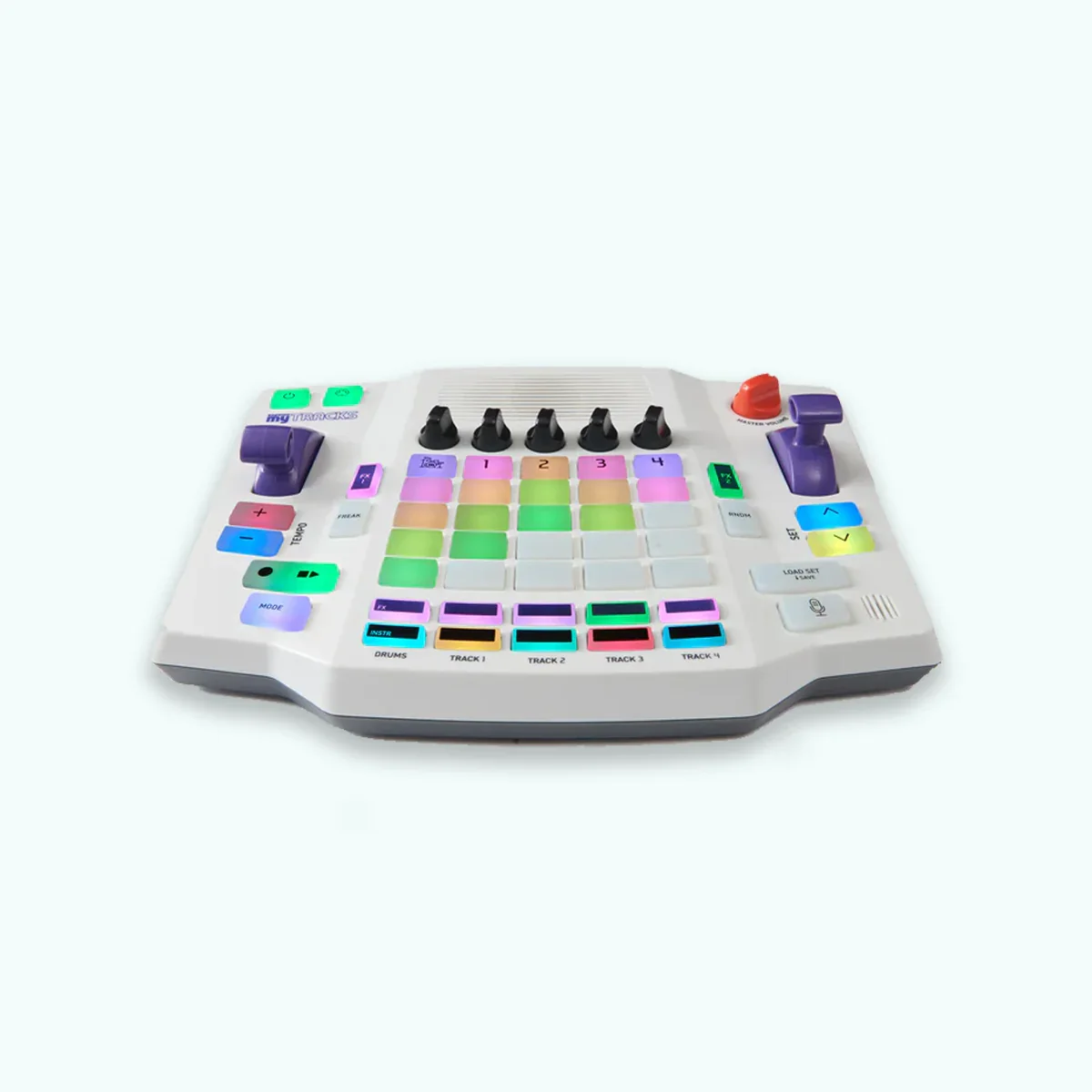
Out of San Francisco, Playtime Engineering has taken a different approach with its Blipblox range. Their instruments put real synthesis engines behind brightly coloured knobs, buttons, and levers. They look like toys, but they're designed by synthesiser engineers and there's genuine audio engineering under the hood. Their myTRACKS sampler/sequencer ($349) is the one that fits most squarely into this story, bringing sampling, sequencing, and live remixing to a physical, screen-free format. It's not cheap enough to be a kids' toy, but the playful design is the point: it makes serious music tech feel approachable.
Orbita
Orbita by Playtronica
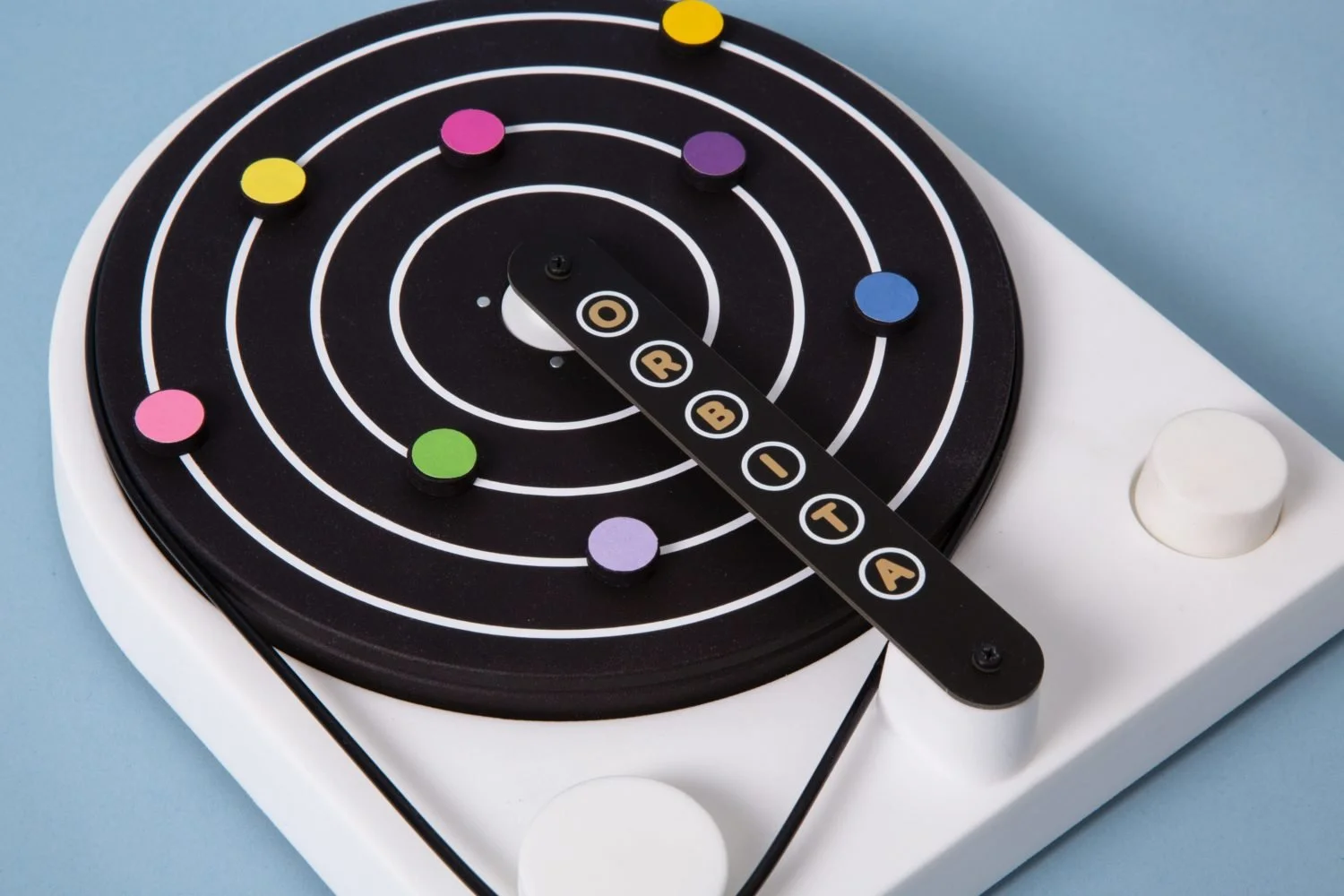
From Playtronica, a creative technology collective with offices in Berlin and Paris, comes Orbita, a circular MIDI sequencer that uses coloured magnets placed on a spinning turntable. Each colour represents a different note, and the turntable's rotation creates the sequence. It's a design that echoes early circular sequencer concepts, most directly the Circular Optical Object Locator, a CCRMA Stanford project from 2002 that used a camera to detect objects on a rotating platter, as well as the humble music box. But where those were research prototypes, Orbita is a polished product connected via USB-C to any MIDI-compatible software or hardware. It sits at the more experimental end of the market, closer to an art object or installation piece than a bedroom production tool.
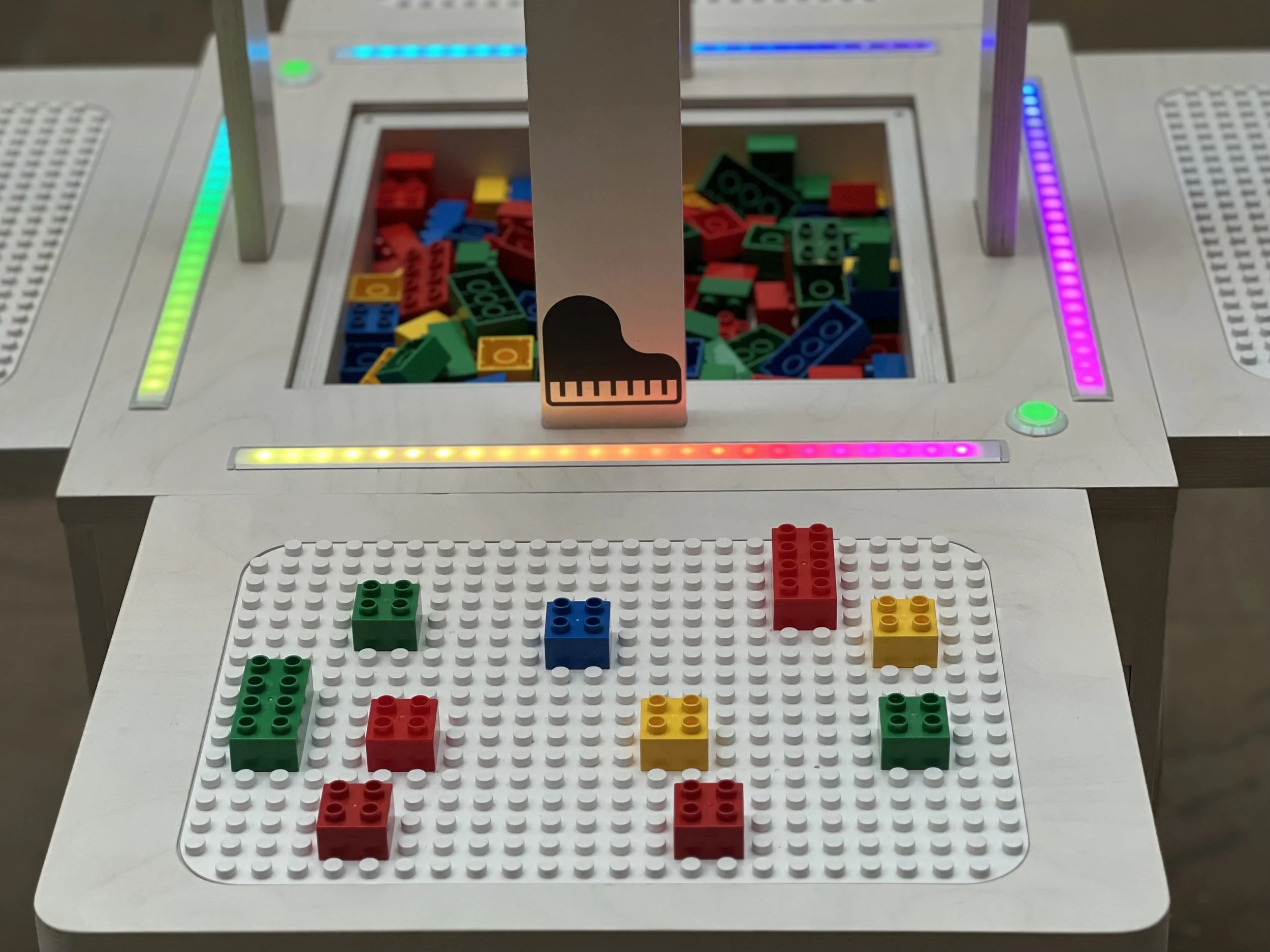
BeatBlocks Live installation
BeatBlocks by Playable Technology (Thats us!)
And then there's BeatBlocks, our own contribution to this story. BeatBlocks uses AI and computer vision to turn real-world LEGO and DUPLO bricks into musical instruments. Place bricks on any surface, point an iPad camera at them, and each brick becomes a drum, a synthesiser, a piano, whatever you choose. The colour, size, and position of each brick maps to musical parameters, turning the simple act of building with LEGO into the act of composing music.
What makes BeatBlocks distinctive is that the tangible objects aren't custom-made components. They're things you already have in your home. There's no special hardware to buy beyond an iPhone or iPad. And because it uses computer vision rather than embedded sensors, the creative possibilities are open-ended. BeatBlocks iOS, BeatBlocks Studio, and BeatBlocks Live (our installation platform) each serve different contexts, from family play to professional education to public exhibitions.
That design philosophy comes from our background in accessible music technology. Years of work in that field taught us that tactile interfaces aren't just nice to have for some users; they're more intuitive and engaging for all users. It also taught us that the best tools are the ones people already own. Rather than asking families to buy yet another piece of dedicated hardware, BeatBlocks reuses the technology already in your pocket (or your child's toy box) and turns it into something musical.
BeatBlocks grew directly from academic research in tangible interaction, computer vision, and accessible music technology, the same intellectual tradition that produced the Reactable and the BeatBearing. Along the way it's been to SXSW, picked up a BIMA Silver Award for Use of AI, and been part of installations internationally. But the mission has always been the same one that drove those early research prototypes: make music creation something you can reach out and touch.
Why Now? Why All at Once?
So why are all these products turning up at the same time? A few reasons.
The underlying technology has matured. Computer vision, sensor arrays, Bluetooth MIDI, embedded audio processing: the components needed to build responsive, low-latency tangible instruments are now affordable and reliable enough for consumer products.
There's a growing cultural appetite for screen-free experiences, particularly for children. Parents are actively seeking alternatives to tablets and phones, and "screen-free" has become a selling point rather than a limitation.
The research foundation is deep. Decades of work in tangible user interfaces, embodied interaction, and new interfaces for musical expression (NIME) have produced a rich body of knowledge about what works, what's intuitive, and what creates engaging experiences. The products arriving now aren't shots in the dark; they're built on years of published research and iterative design.
And music technology itself has hit a ceiling of complexity. DAWs are incredibly powerful but also incredibly intimidating for the uninitiated. There's a clear demand for something more immediate, something that recovers the directness of picking up a drumstick or placing a record on a turntable.
Looking Forward
We're in an interesting period for music technology. The vision that researchers like Sergi Jordà, Peter Bennett, and Hiroshi Ishii laid out, that digital music creation could be physical, spatial, collaborative, and intuitive, is being realised in products that people can actually buy and use in their homes.
Each of the products in this new wave takes a different approach. Some use custom hardware, others use existing objects. Some target professional musicians, others target five-year-olds. Some are standalone, others connect to broader ecosystems. The price range alone tells a story: from $465 for Orbita and $349 for myTRACKS, down to $9.99 for BeatBlocks Studio on the App Store. That diversity is a strength. It means the category is being explored from every angle, and the audience for tangible music-making is being expanded with every new entry.
At Playable Technology, we're proud to be part of this movement. The journey from sixteen coloured buttons on a 1980 drum machine to AI-powered LEGO music-making has been a long one, but the destination feels like it was always inevitable. Music is physical. Music is spatial. Music is something you make with your hands.
It's about time our technology caught up.
BeatBlocks Studio is available now on the App Store. Visit playable.tech/beatblocks-studio to learn more.
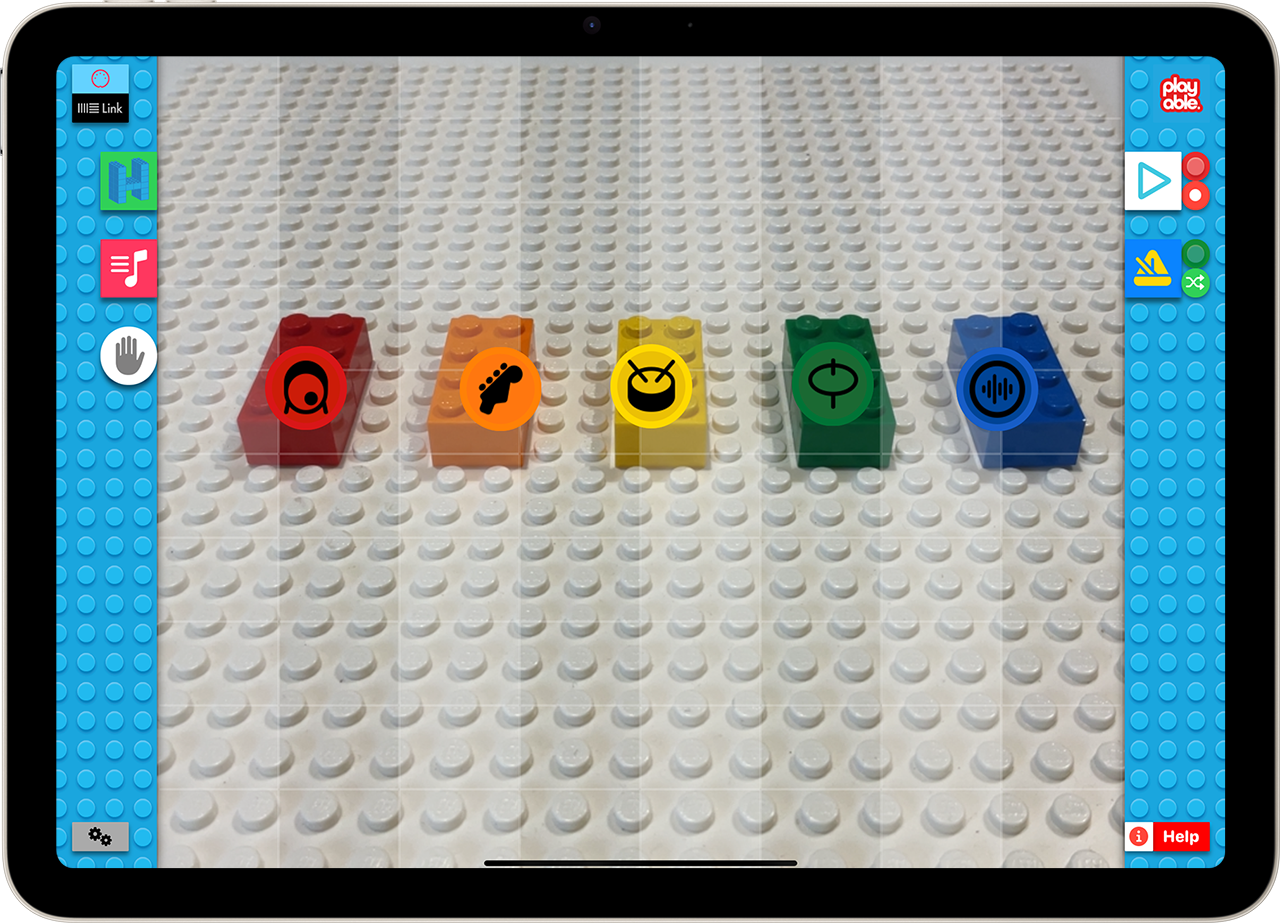
BeatBlocks Studio for iPad / iPhone